The Cast Iron Footprint: How Much Table Saw Wing Do You Really Need?
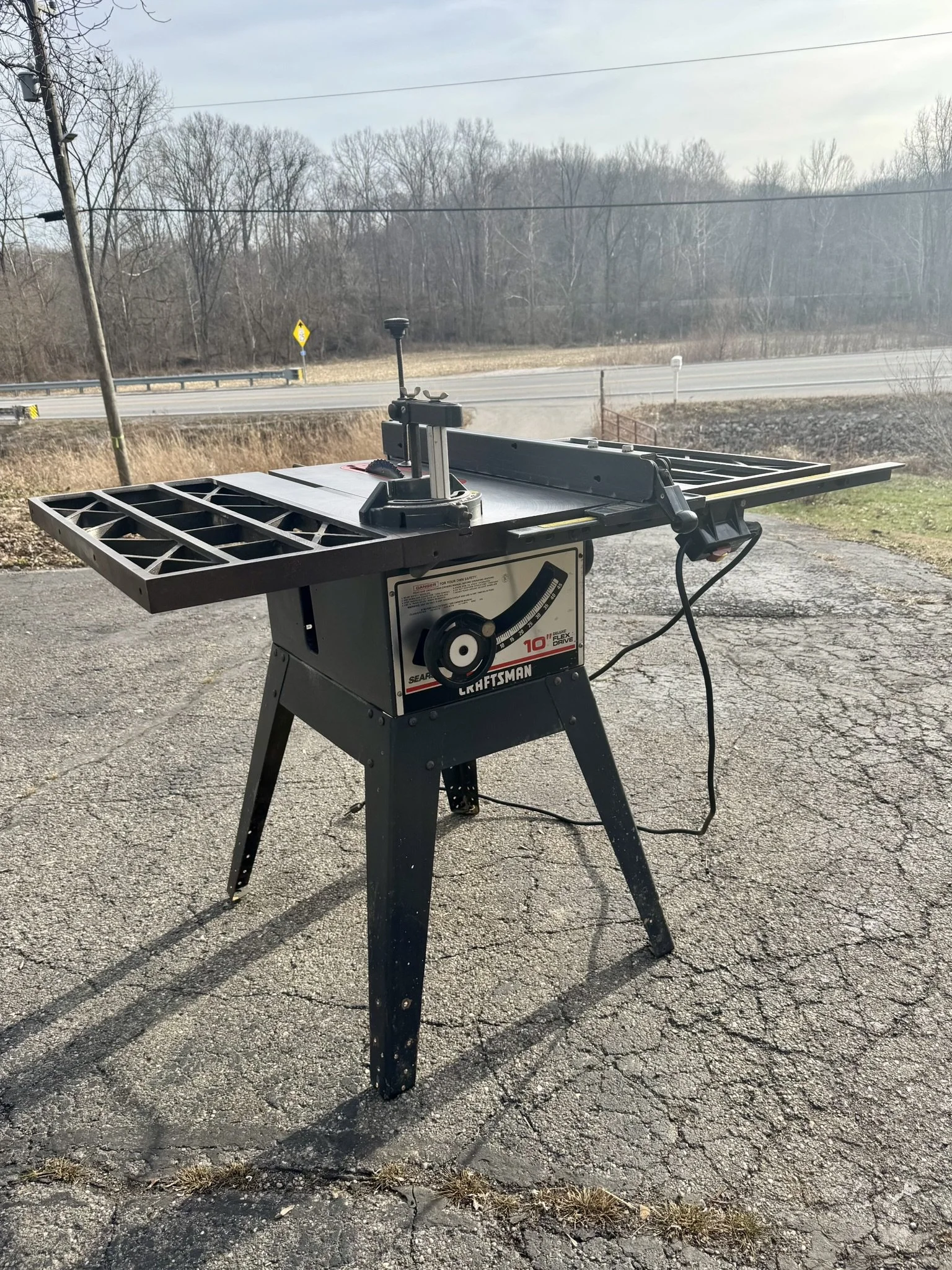
Massive wings offer stability but can eat your shop alive. We break down how to find the perfect balance between precision and floor space.
If you walk into any professional cabinet shop, you’ll likely see table saws that look like aircraft carriers, massive, sprawling surfaces of polished cast iron extending four or five feet to the right of the blade. It’s an inspiring sight. But for the craftsman working out of a single-car garage or a basement in Nashville, IN, that "aircraft carrier" is often a recipe for a shop that is impossible to move around in.
At Brown County Tool Works, we specialize in restoring the "Great American Table Saws" the Deltas, the Powermatics, and the legendary Craftsman 113s. One of the most common questions we get during a restoration consult is: "Should I add more wings, or keep it compact?"
The answer isn't just about inches; it's about the physics of the cut and the reality of your workflow.
The Physics of the Wing: Why Surface Area Matters
A table saw wing isn't just a place to set your coffee. Its primary job is to provide reference.
When you are pushing a 4x8 sheet of plywood or a heavy 8/4 oak slab through a blade, any "tip" or "sag" in the material changes the geometry of the cut. If the board tilts even a fraction of a degree because it’s hanging off the side of a narrow table, you lose your 90-degree squareness.
Large wings provide three critical advantages:
Miter Gauge Support: If you’re cross-cutting long boards, a wider wing supports the "tail" of the miter gauge, preventing it from drooping and causing a bind.
Rip Capacity Stability: A wide set of wings allows your fence rails to extend further, giving you the ability to rip wide panels safely.
Vibration Dampening: Cast iron has a high "damping capacity." The more mass you have bolted to your saw's cabinet, the less vibration reaches the blade, resulting in a cleaner "glue-line" rip.
The "Wing Creep" Problem: When More is Less
There is a phenomenon we call "Wing Creep." It starts with a standard saw. Then you add a cast iron wing to the left. Then a wide extension to the right. Then a router table insert. Suddenly, your "compact" shop has a 7-foot wide monolith in the center of it.
The downsides of excessive wings include:
The Junk Magnet: Large, flat surfaces in a shop inevitably become "horizontal storage." If your table saw wing is covered in glue bottles, squares, and offcuts, it’s not a tool—it’s a shelf.
Mobility Issues: Even with a high-quality mobile base, a saw with 50 inches of cast iron wings is a bear to move. It changes the center of gravity and makes the machine prone to tipping if you hit a crack in the floor.
The "Work-Around" Fatigue: In a small shop, you spend 50% of your time walking around your tools. Adding 12 inches of unnecessary wing might mean you have to "squeeze" past your saw 50 times a day. That fatigue adds up.
Technical Deep Dive: Materials Matter
Not all wings are created equal. When upgrading or restoring a table saw, you generally have three choices:
1. Solid Cast Iron (The Gold Standard)
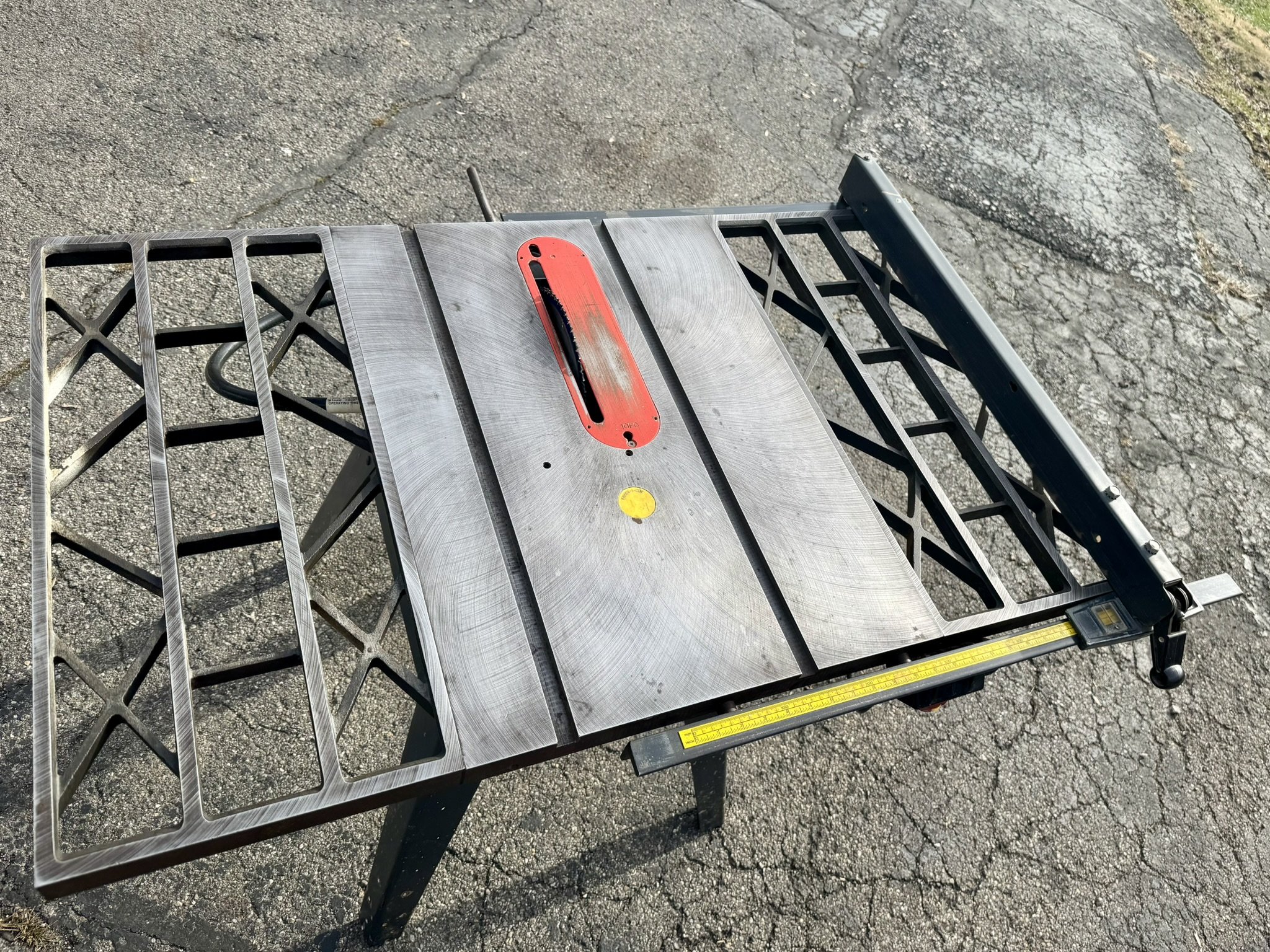
This is what we recommend most often at Brown County Tool Works. Solid cast iron wings are heavy, dead-flat, and last forever. They offer the best vibration dampening. However, they are the heaviest option and require the most maintenance to prevent rust (especially in our humid Indiana summers).
Best for: Dedicated furniture makers who need absolute precision.
2. Stamped Steel (The Lightweight Alternative)
Many vintage Craftsman and Delta saws came with "webbed" or stamped steel wings. They are significantly lighter, making the saw easier to move. The downside? They are rarely perfectly flat and offer almost no vibration dampening.
Best for: Shops that need to remain highly mobile or contractors who move their saws to job sites.
3. Laminate or Wood Extensions
Often used for the "far right" extension, these are usually built from double-layered MDF with a Formica top. They are affordable and allow you to customize the size perfectly.
Best for: Integrating a router table into your saw to save space.
Calculating Your "Sweet Spot"
How do you decide? Use the 80/20 Rule of Woodworking.
The Furniture Maker: If 80% of your work is furniture (tables, chairs, boxes), you usually only need about 12" of wing on either side of the blade. This gives you enough room for a miter gauge and standard rips without eating the shop.
The Cabinet Maker: If you are building kitchen cabinets and breaking down full sheets of Baltic Birch, you need at least 30" to 50" of rip capacity to the right. In this case, the floor space "cost" is a necessity.
Maintenance: Keeping the "Iron Footprint" Pristine
If you choose the cast iron route, maintenance is non-negotiable. A rusted wing creates friction, and friction leads to dangerous kickbacks.
De-Rusting: Use a specialized rust remover or a fine-grit sanding block with mineral spirits to take it down to "bright" metal.
The "Nickel" Test: Once clean, place a nickel on its edge on the table and turn the saw on. If the nickel falls, your wings might be causing vibration or your motor is out of alignment.
Protection: We recommend a high-quality paste wax or a specialized ceramic coating (like GlideCote) to keep the surface slick and moisture-resistant.
The Nashville Solution: Customizing Your Shop Layout
At Brown County Tool Works, we don't believe in "one size fits all." When we restore a machine for a client here in Nashville, IN, we look at their shop drawings first. Sometimes, the best "wing" isn't a wing at all, it's a folding outfeed table or a multi-purpose workbench that sits at the exact height of the saw.
We specialize in "right-sizing" vintage machinery. Whether that means machining a custom set of shortened rails for a 113-series saw or bolting on a heavy-duty cast iron extension to a modern cabinet saw, we help you find that perfect balance.
Conclusion: It’s Your Shop, Not a Showroom
Don't buy into the "bigger is better" hype if it makes your shop a chore to work in. A 10-inch table saw with perfectly aligned 12-inch wings will always outperform a massive 50-inch setup that is out of square or covered in clutter.
Precision comes from the quality of the surface, not just the quantity.
Ready to Find Your Shop’s Perfect Footprint?
At Brown County Tool Works, we don’t just sell parts; we provide shop solutions. Whether you are looking to add massive cast iron wings to a vintage Delta or need a custom-shortened rail system for a compact garage setup, we can help. We specialize in the precision alignment and restoration of table saws to ensure your "iron footprint" is as efficient as it is accurate.
Contact Brown County Tool Works today to discuss your machine restoration or to browse our current inventory of right-sized vintage saws here in Nashville, IN. Let’s get your shop running with factory-level precision.
FAQ: Frequently Asked Questions
Q: Can I mix and match wings from different brands? A: Often, yes! Most vintage 10-inch saws use a standard 27-inch deep table. As long as the bolt holes align (or you are willing to drill new ones), you can often put a Delta wing on a Craftsman saw.
Q: Are "webbed" cast iron wings better than solid ones? A: Webbed wings (the ones with holes in them) offer a great middle-ground. They provide the stability of cast iron with about 30% less weight. They are excellent for hybrid saws.
Q: How do I know if my wings are sagging? A: Place a 4-foot level or a precision straightedge across the main table and out onto the wings. If you see light under the straightedge at the seam, your wings need to be re-shimmed or adjusted.