Why the Tilting Head Band Saw is a Shop Game-Changer: Craftsman 113.247210 & 113.247310
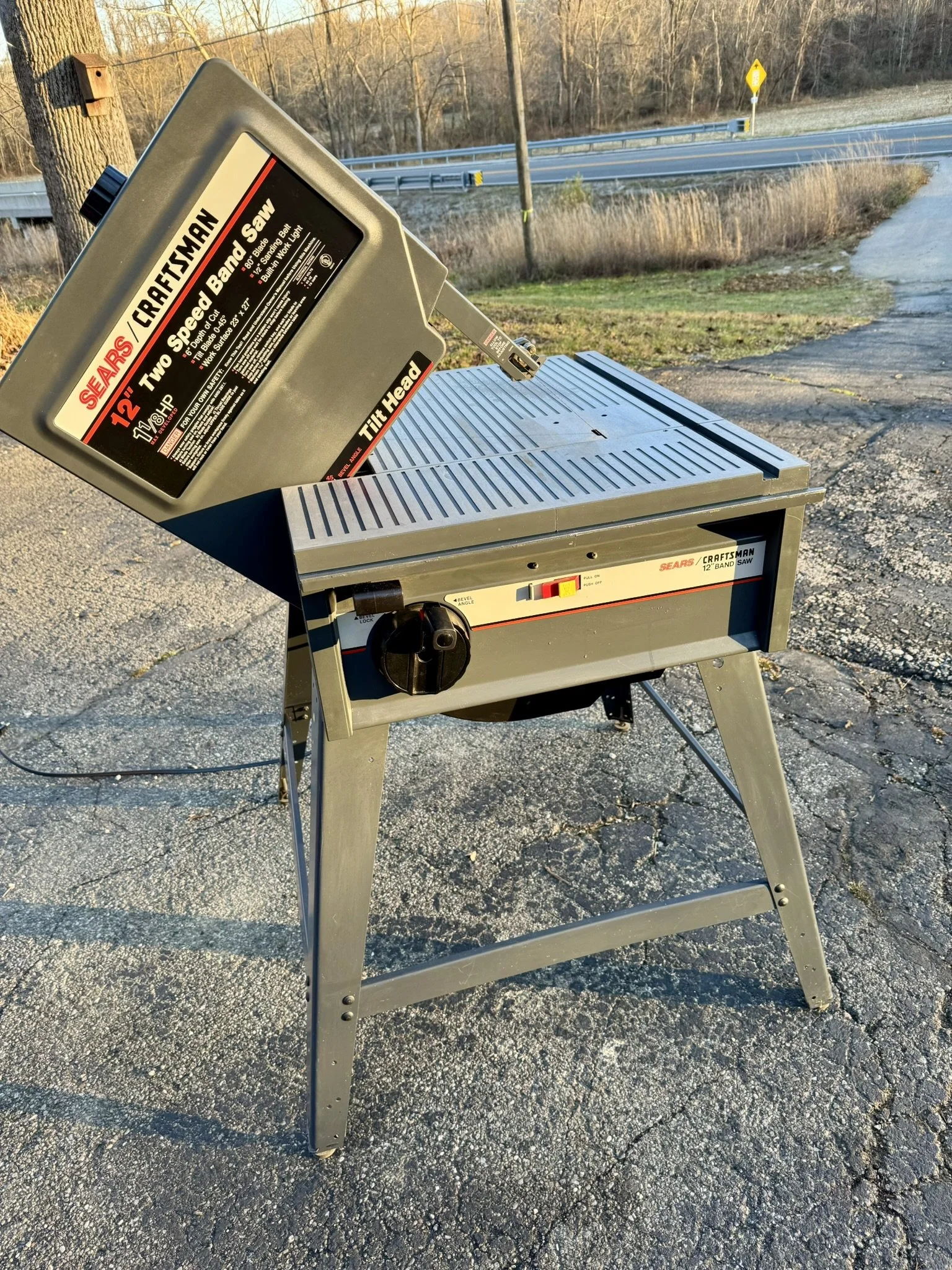
For many woodworkers, the name “Craftsman” brings to mind the ubiquitous 113-series table saws that built half the furniture in America. But hidden in the vintage catalog are two specific gems that are currently undergoing a massive resurgence in the woodworking community: the Craftsman 12-inch Tilting Head Band Saws (Models 113.247210 and 113.247310).
Unlike modern saws where the table tilts, these vintage powerhouses tilt the entire saw head. It sounds like a small distinction, but for the serious craftsman, it’s a total game-changer.
The Gravity Problem: Why Tilting the Head Wins
On a standard band saw, if you want to cut a 45-degree bevel, you tilt the table. This means gravity is constantly trying to slide your workpiece (often a heavy, expensive slab) down the incline and away from the fence.
With the Craftsman 113.247210 and 113.247310, the table stays perfectly level. You tilt the saw mechanism itself. This allows you to:
Maintain Total Control: Your workpiece sits flat on the table, allowing you to focus on the cut rather than fighting gravity.
Cut Large Stock Safely: Try beveling a 4-foot long mantle on a tilted table, it’s a recipe for disaster. On a tilting head saw, it’s as easy as a straight cut.
Ensure Better Accuracy: When the table is level, your miter gauges and fences remain 100% effective, preventing the "creep" that ruins precision joinery.
A Technical Masterclass: 113.247210 vs. 113.247310
While both models share the same legendary tilting head design, they were built for different shop configurations:
Model 113.247210 (The Open Leg Set): The classic configuration. It’s lighter, easier to move with a mobile base, and perfect for the enthusiast who values a smaller footprint.
Model 113.247310 (The Deluxe Cabinet): The "Pro" version of its day. This model features a full enclosed cabinet base, providing extra stability, integrated storage for blades, and better vibration dampening.
Key Specs at a Glance:
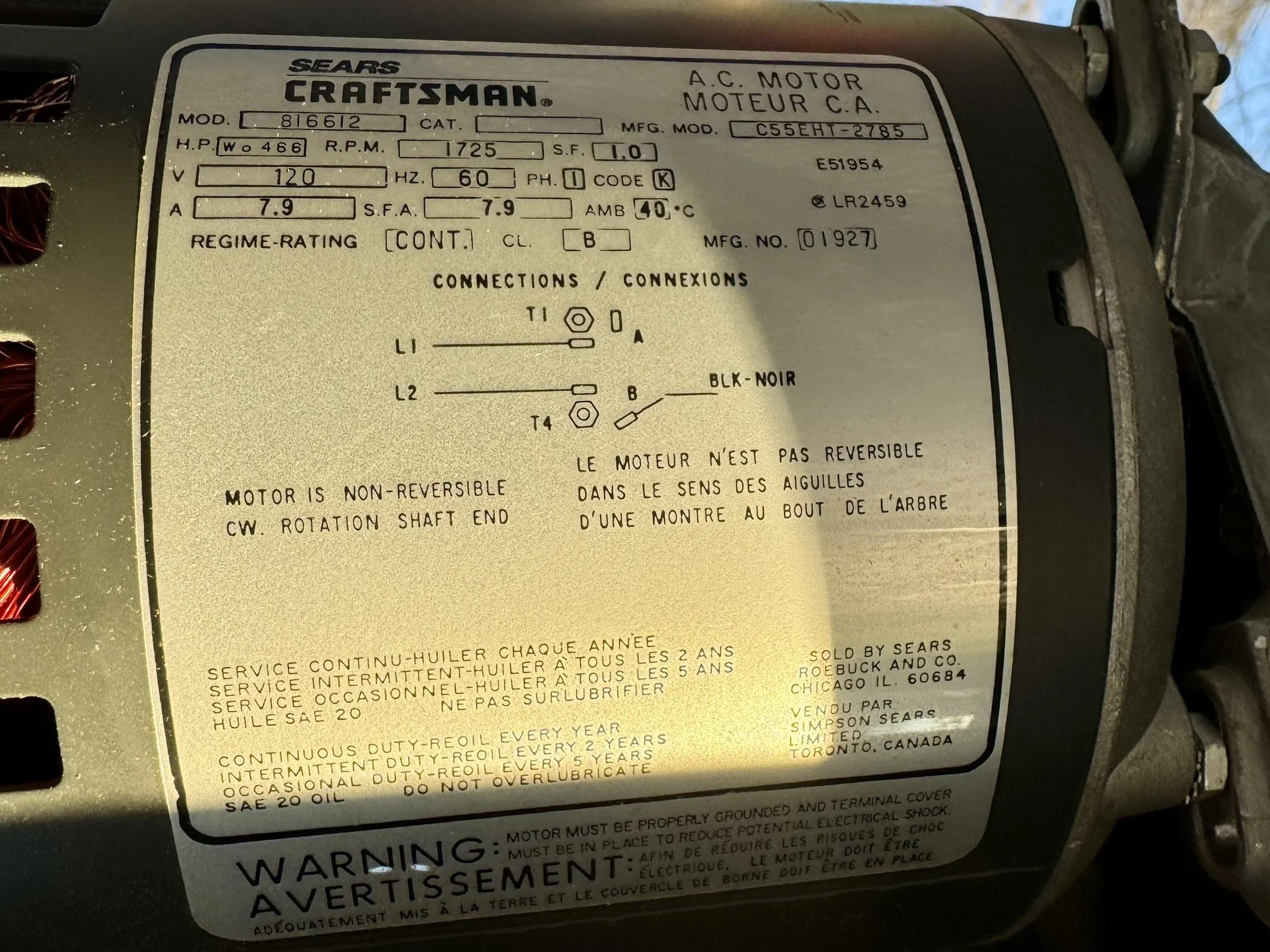
Power: A robust 1-1/8 HP induction motor, significantly more "oomph" than the 1/2 HP motors found on most 12-inch saws today.
Massive Work Surface: Both models feature an incredible 23" x 27" table. This is nearly double the surface area of modern benchtop models, providing professional-grade support for large projects.
Versatility: Equipped with a 2-speed drive system, these machines can handle everything from delicate scrollwork in pine to resawing hardwoods or even cutting non-ferrous metals with the right blade.
Space-Saving Design for the Modern Shop
In a world of "compact" tools that lack power, these Craftsman units offer the best of both worlds. Because the table is so large and the motor is tucked neatly away, these machines often replace two tools in a small shop: a scroll saw for curves and a light-duty resaw for dimensioning lumber.
The Essential Maintenance & Tune-Up Guide
Owning a vintage Craftsman 113-series saw is a bit like owning a classic truck, it’s built to last, but it demands regular maintenance to perform its best. To get factory-level precision, follow this tune-up checklist:
1. Aligning the Tilting Mechanism: The magic of the 113.247210 is the tilting head, but if the trunnions are gummed up with 40-year-old sawdust, the movement will be jerky. Vacuum the internal gears and apply a dry PTFE lubricant. Avoid grease, as it attracts dust and creates a "grinding paste" that wears down the gears.
2. Squaring the Table: Even though the head tilts, your "Zero" point must be perfect. Use a precision engineer’s square to ensure the blade is exactly 90 degrees to the table when the tilt scale reads zero. If it’s off, there are stop-bolts underneath the head assembly that can be adjusted for a perfect return to center.
3. Co-Planar Wheel Alignment: For the blade to track truly, the upper and lower wheels must be in the same plane. You can check this with a long straightedge held against both wheels. If they aren’t aligned, you may need to adjust the shims on the lower wheel shaft—a common task for a full restoration.
Common Issues and "Pro-Fixes"
If you’ve just pulled a 113.247310 out of a barn or bought one at an estate sale, you’ll likely encounter these three common vintage hurdles:
Dry-Rotted Tires: The original rubber tires on these saws often become brittle and crack. We recommend replacing them with Urethane Tires. They don't require adhesive, they provide better blade grip, and they won't dry out over time.
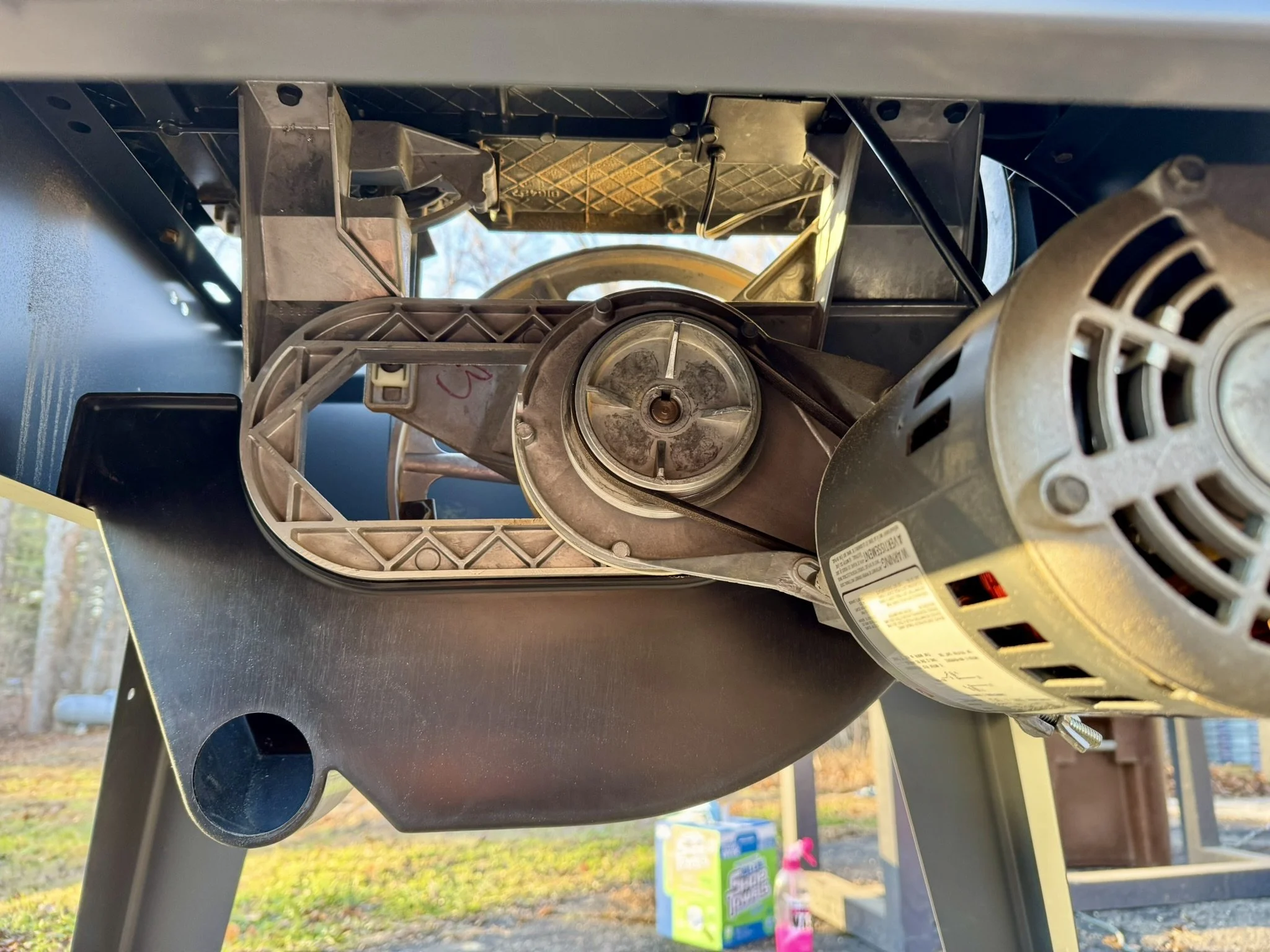
Vibration and Belts: If the saw vibrates excessively, the old belt has likely developed a "set" or memory from sitting in one position. Replacing it with a fresh new one will instantly smoothen the operation and reduce noise significantly.
Blade Guide Upgrades: The stock metal blocks can generate heat and friction. For high-precision scroll work, many woodworkers swap these for "Cool Blocks" or ball-bearing guides to allow the blade to run cooler and last longer.
The Ultimate Blade Selection Guide for 12" Saws
One of the most common questions we get at Brown County Tool Works is: "What blade does this thing take?" Both the 113.247210 and 113.247310 typically utilize an 80-inch blade. While the manual suggests a range, here is our recommended "Shop Starter Kit":
1/4" 6 TPI (Teeth Per Inch): Your go-to for general curves and scrollwork.
1/2" 3 TPI (Skip Tooth): Essential for resawing. The wide blade provides the beam strength needed to slice veneers, while the low tooth count clears sawdust quickly.
1/8" 14 TPI: For ultra-fine, tight-radius work (like making wooden puzzles or jewelry boxes).
Vintage vs. Modern: Is It Worth the Restore?
You could go to a big-box store today and buy a brand-new 12-inch band saw for $400. So why spend time on a 40-year-old Craftsman?
Mass and Stability: Modern entry-level saws often use thin steel frames that can flex under high blade tension. The 113-series features heavy cast-iron components that absorb vibration and stay true under load. Repairability: If a modern saw’s electronic controller dies, the tool is often "bricked." On these Craftsman models, every part is mechanical. Bearings are standard sizes available at any hardware store, and the 1-1/8 HP induction motor can be rebuilt by any local electric motor shop.
At the end of the day, a restored Craftsman 113.247310 isn't just a tool you use; it’s an heirloom you maintain. It represents a time when "American Made" meant a tool was built for a lifetime of service.
Bringing Precision Back to Nashville, IN
At Brown County Tool Works, we believe that "vintage" shouldn't mean "worn out." These tilting head saws were built during an era of cast iron and over-engineering. When properly tuned, they offer a level of factory precision that modern plastic-heavy alternatives simply can't match.
Whether you’re hunting for a restored 113.247310 cabinet model or need help dialling in the tracking on your 113.247210, we’re here to help. These machines aren't just tools; they are masterclasses in mid-century design that are still winning the "shop game" 40 years later.
Ready to upgrade your shop’s versatility? Contact Brown County Tool Works to see our current inventory of restored vintage machinery or to schedule a precision tune-up for your own equipment here in Nashville, IN.