Bench Top Belt vs. Disc Sander: Which Do You Need?
Bench Top Belt vs. Disc Sander: Which One Does Your Shop Actually Need?
Whether you are restoring vintage furniture or outfitting a brand-new woodworking shop, a stationary bench top sander is an absolute necessity. But when it comes time to clear off some bench space, you are faced with a classic dilemma: do you need a bench top belt sander, a disc sander, or perhaps a combination of the two?
While they might seem interchangeable at a glance, belt and disc sanders excel at entirely different tasks. Understanding how they shape, smooth, and square your workpieces will help you make the right choice for your shop's footprint.
The Bench Top Belt Sander: The Material Removal Master
A bench top belt sander features a continuous loop of sandpaper riding over two drums. It provides a long, flat surface that is incredibly efficient at removing a lot of material quickly.
Best Uses for a Belt Sander:
Flattening Large Surfaces: The long platen (the flat metal plate behind the belt) makes it ideal for flattening faces and edges of longer boards.
Smoothing End Grain: Excellent for carefully sneaking up on a layout line on end grain without aggressive tear-out.
Sharpening Tools: With the right grit and a gentle touch, a belt sander can be used to re-establish bevels on chisels or lathe tools.
Convex Curves: By removing the backstop, you can carefully sand outside (convex) curves along the long belt.
The Downside:
Belt sanders can be too aggressive if you aren't careful. It is very easy to inadvertently sand a dip or gouge into your workpiece if you hold it in one spot for too long.
The Disc Sander: Precision and Squaring
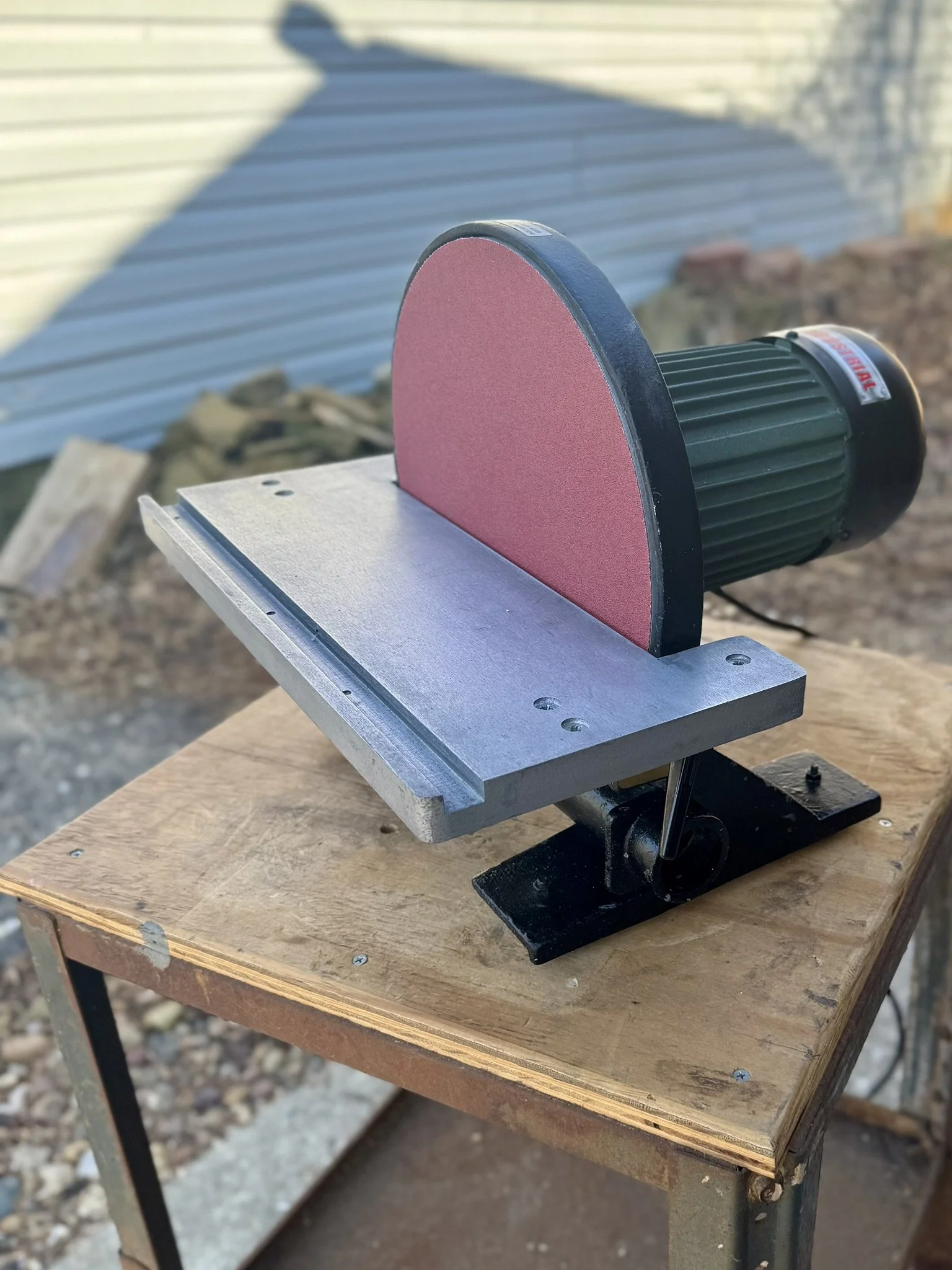
A disc sander consists of a circular piece of sandpaper adhered to a spinning metal plate, usually paired with an adjustable work table and a miter slot.
Best Uses for a Disc Sander:
Squaring Ends: This is where the disc sander truly shines. By using a miter gauge in the table slot, you can create perfect 90-degree or angled ends on smaller pieces of wood.
Outside Curves (Convex): The spinning disc is fantastic for dialing in a smooth, sweeping curve on a bracket or template.
Precision Fitting: When you need to shave off just a fraction of a millimeter to make a joint fit perfectly, the stability of the disc sander table offers unmatched control.
The Downside:
A disc sander spins in a circle, meaning the outside edge is moving much faster than the center. You must only sand on the "downward" spinning side of the disc; sanding on the upward side will violently lift your workpiece off the table. Furthermore, it is not suited for sanding the faces of long or wide boards.
The Verdict: Which Do You Need?
If your work involves flattening faces, smoothing out rough stock, or shaping longer pieces, the belt sander is your workhorse.
If you are a box maker, a toy builder, or someone who relies on perfectly squared ends, precise angles, and dialing in exact fits, the disc sander is your precision instrument.
The Ultimate Solution: The Combo Sander
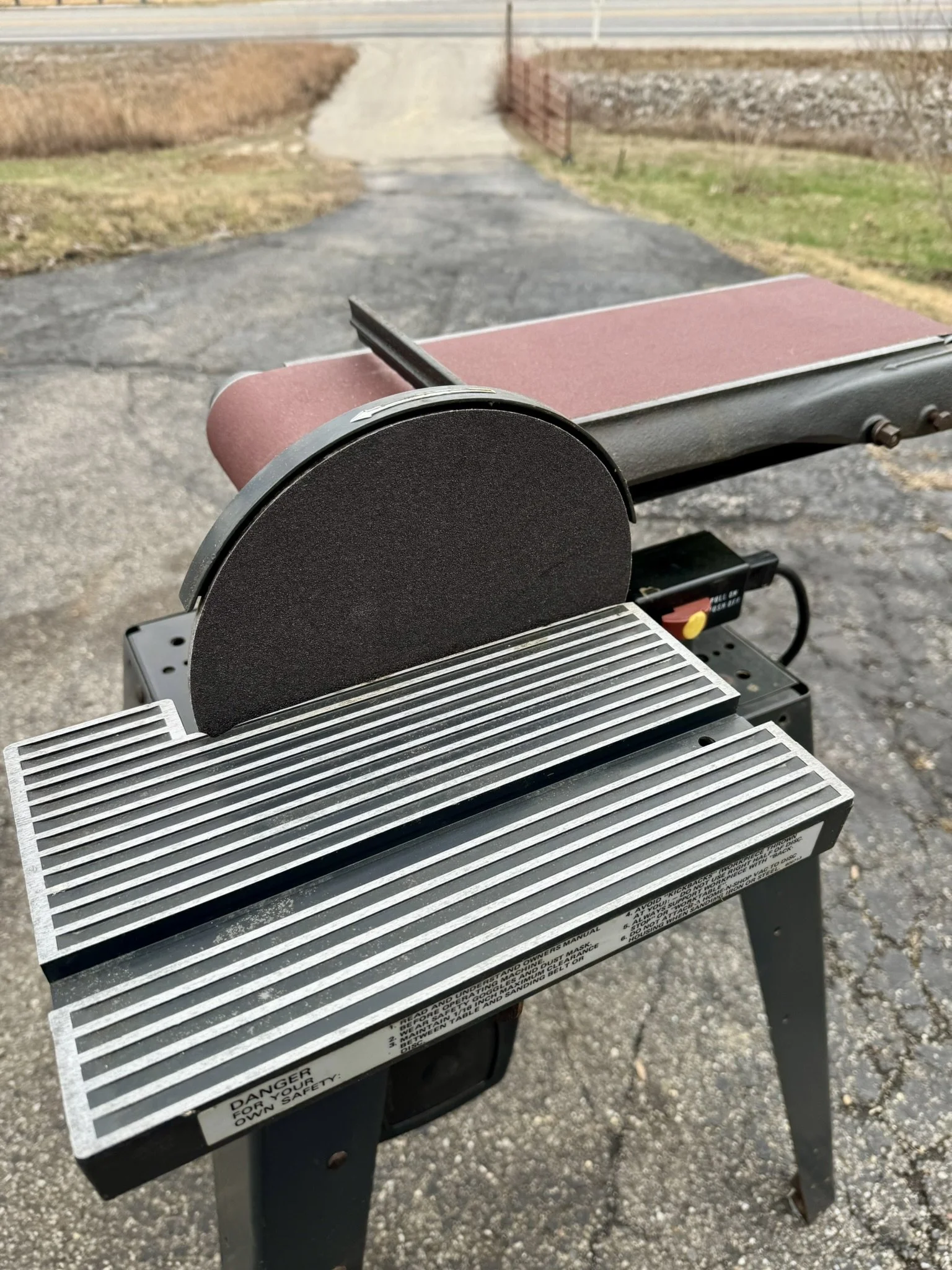
For most small to medium shops, the best answer is usually both. A combination belt/disc sander (often featuring a 6x48-inch belt and a 9-inch or 12-inch disc) provides the best of both worlds without taking up twice the bench space. You can hog away material on the belt and step right over to the disc to square it up perfectly.
Looking for a rugged, vintage bench sander for your shop? Check out the current inventory at Brown County Tool Works.