Band Saw vs. Scroll Saw: What’s the Difference, and Do You Need Both?
If you are setting up your woodworking shop or looking to upgrade your cutting capabilities, you’ve likely found yourself staring at two very different machines that seem to do the same thing: cutting curves.
The band saw and the scroll saw are both essential shop staples, but confusing the two is a common trap for beginners. While they both excel at non-linear cuts, their mechanics, strengths, and primary uses couldn't be more different.
Here is the ultimate breakdown of the band saw vs. the scroll saw, where a jig saw fits into the mix, and why your shop probably needs all of them.
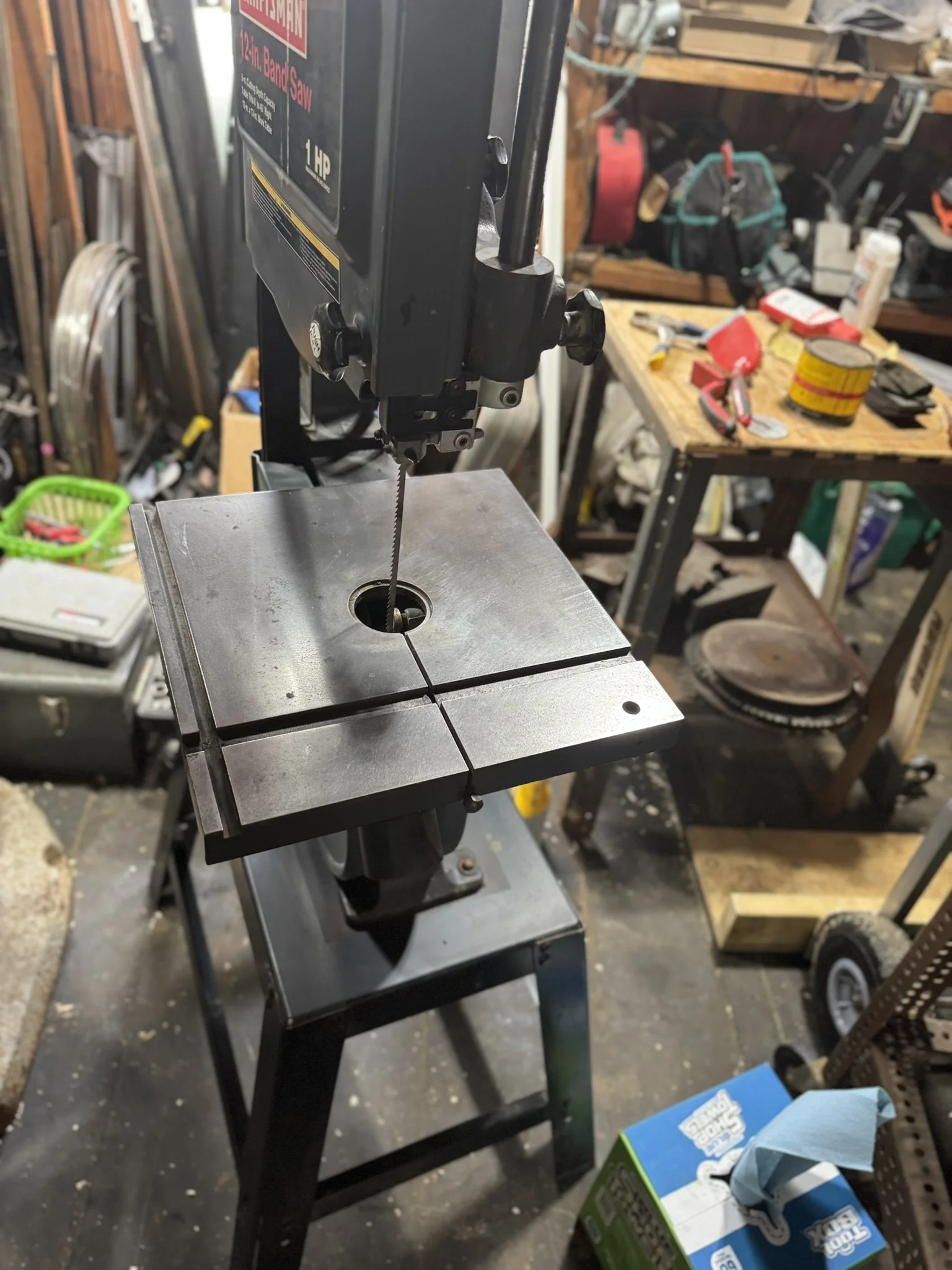
Band Saw
A properly tuned band saw can easily slice through dense hardwoods that would bog down smaller machines.
The Band Saw: The Heavy-Duty Workhorse
A band saw operates using a continuous loop of toothed metal (the band) stretched between two or more wheels. Because the blade only moves in one direction, downward toward the table, it pulls the workpiece securely against the surface, offering incredible stability and power.
Best Uses for a Band Saw
Resawing: Slicing thick boards into thinner, book-matched panels. This is where a band saw truly shines.
Ripping rough lumber: With a fence attached, a band saw can handle ripping duties, especially on uneven edges that aren't safe for a table saw.
Cutting thick materials: A good band saw can easily glide through dense hardwoods, bowl blanks for the lathe, or materials 6 to 12 inches thick (or more, depending on your machine).
Broad curves: Excellent for roughing out cabriole legs, chair parts, or guitar bodies.
The Verdict: The band saw is about power, capacity, and versatility. It is the muscle of the shop.
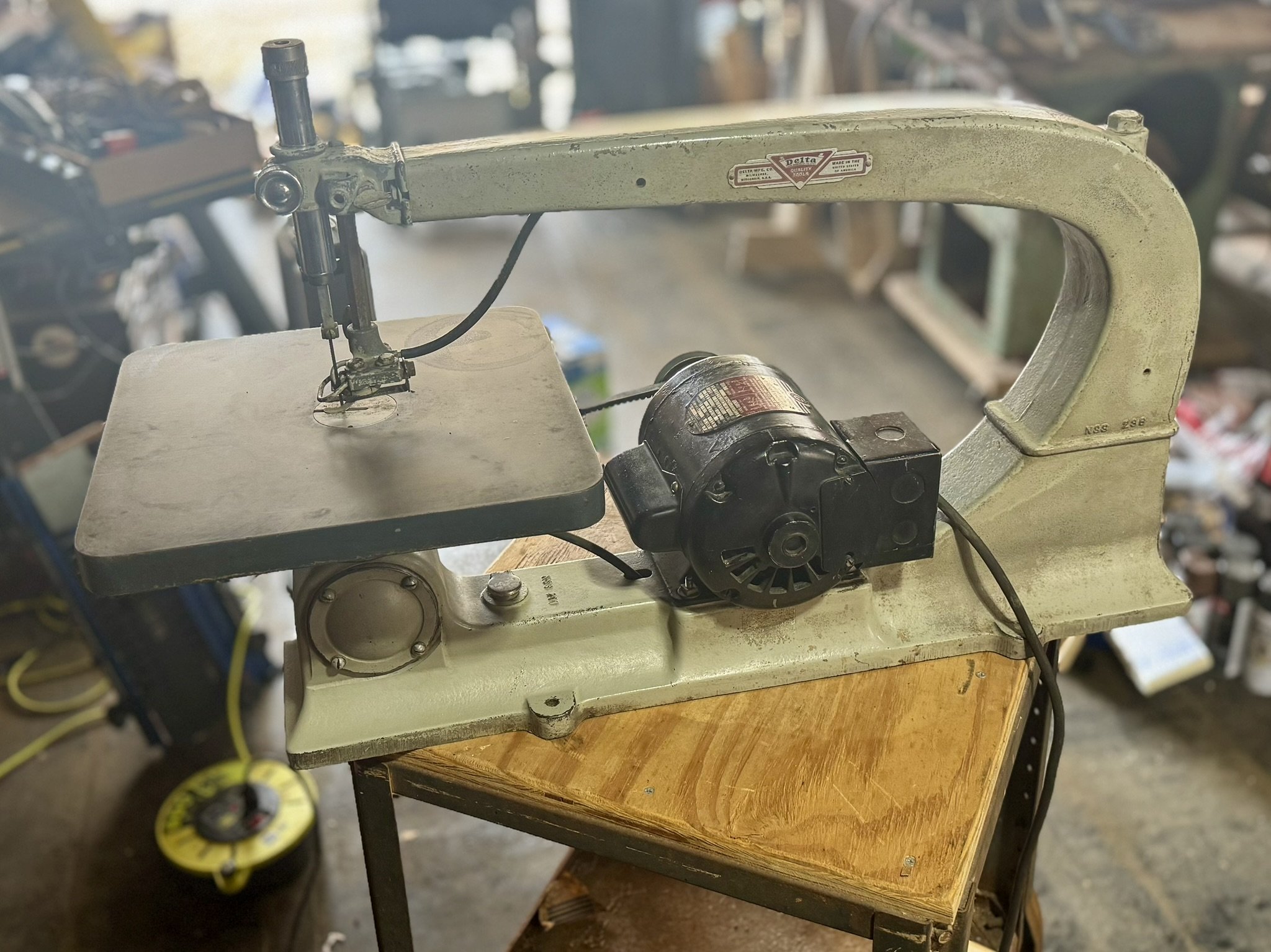
Scroll Saw
The whisper-thin blade of a scroll saw allows for extreme precision, tight radii, and delicate internal cuts.
The Scroll Saw: The Detail Master
Unlike the continuous loop of a band saw, a scroll saw uses a very short, fine blade (often just 5 inches long) that moves rapidly up and down. The stroke length is minimal, making it incredibly safe and highly precise.
Best Uses for a Scroll Saw
Intricate fretwork: Cutting delicate, lace-like patterns into thin wood.
Inside cuts (Piercing): This is the scroll saw’s superpower. You can drill a small hole in your workpiece, unhook the scroll saw blade, thread it through the hole, and cut out an internal shape without breaking the outside edge. You cannot do this on a band saw.
Tight radii: Scroll saw blades are whisper-thin, allowing you to turn on a dime and cut sharp, 90-degree internal corners.
Thin materials: Best suited for wood under 1-inch thick, as well as acrylics, thin metals, and bone.
The Verdict: The scroll saw is about finesse, artistry, and extreme detail. It is the scalpel of the shop.
Head-to-Head Comparison
| Feature | Band Saw | Scroll Saw |
|---|---|---|
| Blade Movement | Continuous downward loop | Reciprocating (Up and down) |
| Material Thickness | Thick (up to 12"+) | Thin (usually under 1") |
| Curve Radius | Broad, sweeping curves | Extremely tight, sharp corners |
| Inside / Piercing Cuts | Impossible | Easy |
| Kerf (Cut width) | Moderate to wide | Hairline |
| Primary Vibe | Heavy-duty sizing and shaping | Delicate detailing and crafting |
Why Your Shop Actually Needs Both
It’s tempting to try and choose just one, but the reality is that these machines are complementary, not competitive.
If you are building a piece of furniture, you will use the band saw to resaw your thick hardwood stock into usable panels and rough out the sweeping curves of the legs. Then, if that design calls for an intricate, decorative inlay or a complex internal cutout, you will move that same piece over to the scroll saw to execute the fine details.
Owning both allows you to handle everything from processing raw logs to creating delicate wooden jewelry.
Side Note: What About the Jig Saw?
Where does the jig saw fit into this debate? A jig saw also uses a reciprocating blade to cut curves, but it is a handheld power tool rather than a stationary machine.
You need a jig saw for bringing the tool to the work, rather than bringing the work to the tool.
Breaking down sheet goods: Cutting a sink hole in a large plywood countertop.
On-site work: Making curved cuts when you aren't in your shop.
Rough internal cuts: Doing an inside cut on a piece of material too large to fit in the throat of your scroll saw.
The jig saw lacks the perfect 90-degree squareness of a band saw and the extreme precision of a scroll saw, but its portability makes it an absolute necessity for DIY projects and home renovations.
Ready to Upgrade Your Cutting Power?
Whether you are looking to do some heavy resawing or intricate detail work, having dialed-in, high-quality machinery makes all the difference. At Brown County Tool Works, we specialize in finding, restoring, and tuning up classic, reliable tools so they are ready to go to work in your shop the minute you load them up.
Keep an eye on our Facebook page for our latest inventory drops, you never know when the perfect vintage band saw or scroll saw will roll through our doors!