How Flat is "Flat Enough"? The Truth About Cast Iron Tool Beds
If you spend enough time restoring vintage woodworking machinery or setting up a new shop, you will eventually find yourself staring at a cast iron table with a straight edge and a set of feeler gauges, chasing an impossible standard: absolute perfection.
At Brown County Tool Works, we specialize in bringing factory precision back to vintage machinery. Because of that, one of the most common questions we hear from woodworkers is, "How flat does my tool bed actually need to be?"
The short answer? Probably not as flat as you think. Let’s break down the reality of cast iron tool beds, acceptable tolerances, and when it’s time to put away the feeler gauges and start cutting wood.
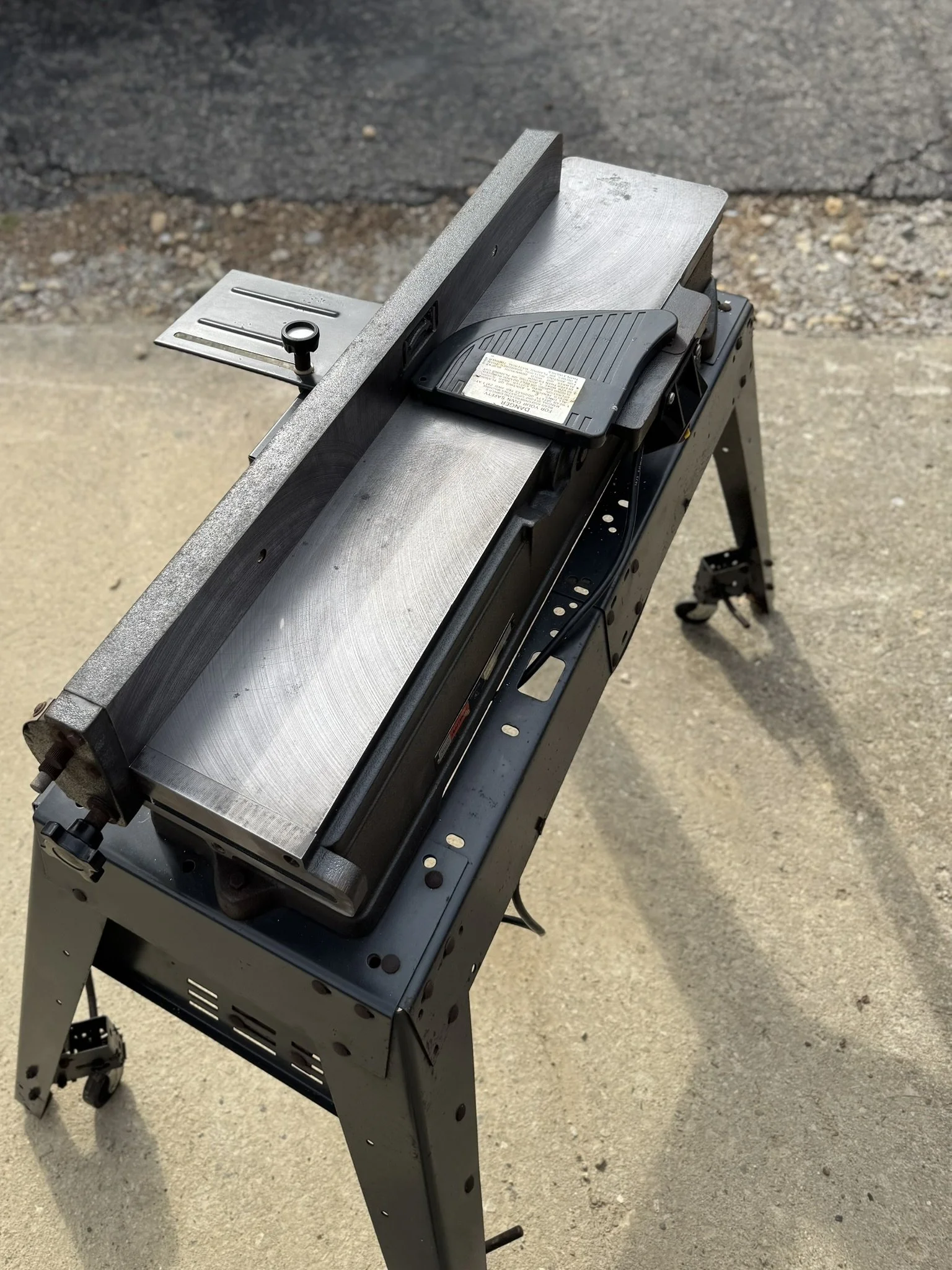
Craftsman 113 6 1/8 inch Jointer
Hand polished bed
The Myth of Absolute Flatness
In the machinist's world, flatness is measured in ten-thousandths of an inch. But woodworking is a different beast. Wood is a living, breathing material that expands, contracts, and warps with changes in humidity and temperature.
If you spend a week flattening a table saw top to an aerospace tolerance of 0.001", the wood you cut on it will likely move more than that the moment it leaves your shop. The goal in woodworking isn't absolute, microscopic flatness it is predictable, repeatable accuracy.
Tool by Tool: What Tolerances Actually Matter?
Not all machines require the same level of precision. Here is a breakdown of how flat your beds really need to be depending on the tool.
1. The Jointer: Where Flatness is King
If there is one machine where you should be a stickler for a flat bed, it’s the jointer. The entire purpose of a jointer is to create a perfectly flat reference face.
The Standard: You want the beds to be co-planar and flat to within 0.005" to 0.010" across their length and width.
The Reality: A slight "hollow" or dish in the center is far more problematic than a slight drop-off at the extreme ends of the tables. If your jointer beds sag in the middle, you will inevitably cut tapers or bowed boards.
2. The Table Saw: Flat Where It Counts
Your table saw is the heart of your shop, but the entire massive cast iron footprint doesn't need to be dead flat.
The Standard: Aim for within 0.005" to 0.015" of flatness.
The Reality: The most critical area is the 12 inches directly surrounding the blade and the path the miter gauge travels. If your extension wings droop by 0.015" at the far edges, it won't drastically affect a standard rip cut. (If you're wondering how much wing space you actually need, check out our guide on The Cast Iron Footprint).
3. The Band Saw: Forgiving and Versatile
Because the band saw cuts with continuous downward pressure against a relatively small surface area, table flatness is much less critical.
The Standard: Anything under 0.020" of variance is generally acceptable.
The Reality: As long as the table doesn't have a severe localized dip right next to the throat plate that causes your workpiece to rock, minor warping won't impact your resawing or curve cutting.
4. The Thickness Planer: It’s About the Rollers
The bed of a thickness planer just needs to provide a smooth surface for the wood to glide across while the feed rollers do the heavy lifting.
The Standard: Flat within 0.010" to 0.015" is excellent.
The Reality: The parallelism between the cutterhead and the bed is far more important than the microscopic flatness of the bed itself.
How to Check Your Tool Beds
To accurately check your machines, you only need two things:
A Precision Straight Edge: Don't use a hardware store level. Invest in a dedicated machinist's straight edge (typically aluminum or steel) guaranteed to be flat to within 0.001" to 0.003" over its length.
Feeler Gauges: A standard automotive set works perfectly.
Lay the straight edge across the bed diagonally, horizontally, and vertically. Try to slide different feeler gauges underneath the straight edge. When the gauge slides under with slight resistance, that is your variance.
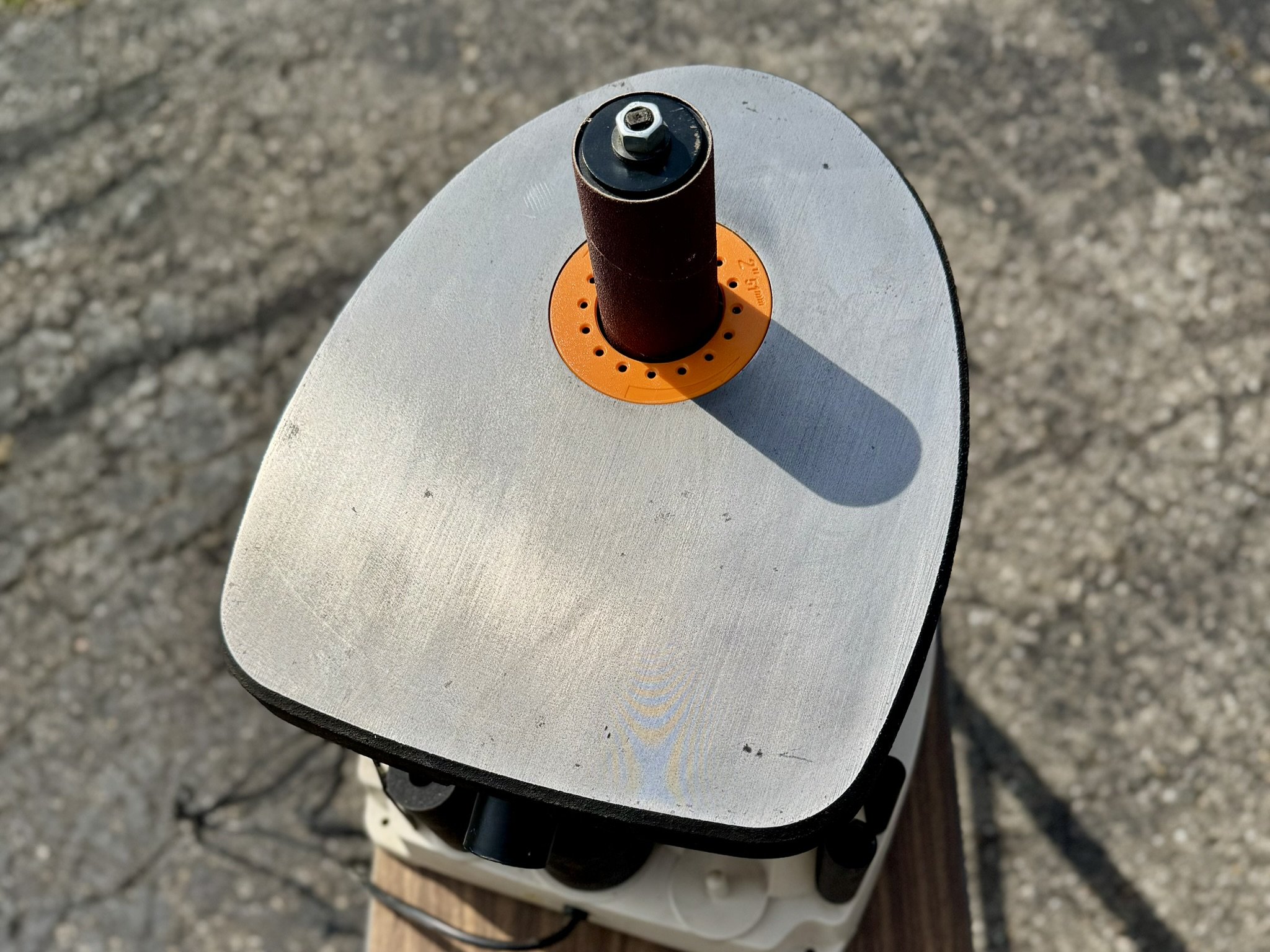
Shop Fox Oscillating Sander
Hand Polished Bed
When to Stop Worrying and Start Woodworking
Vintage machinery, like the classics we restore here in Nashville, IN, were built with massive, well-seasoned cast iron webbed to prevent warping. They hold their shape incredibly well. However, if you find a dip of 0.008" in your table saw, don't panic.
Ask yourself: Is this variance actually affecting the quality of my joinery? If your boards are coming out square, your glue lines are tight, and your furniture looks great, your tools are flat enough.
At Brown County Tool Works, we believe in chasing precision but never at the expense of making sawdust.
Ready to upgrade your shop with machinery you can trust? Check out our current inventory of restored vintage tools, ready to load out.